Key takeaways
- Commercial drone work in India needs a DGCA Remote Pilot Certificate, issued by an approved RPTO.
- You need to be 18 or older and 10th pass to join Small or Medium Class RPC training.
- Our Small and Medium Class courses are 5 days, hybrid, with theory, simulator and outdoor flying.
- A free 2-day theory class lets you learn the basics before paying for anything.
Step 1: Understand the rules first
Before you buy a drone or a course, learn how Indian drone rules work: weight classes, airspace zones and what the DGCA expects from a pilot. This avoids choosing the wrong category later.
The easiest way to do this is our free drone pilot theory class, a 2-day beginner class covering DGCA basics, airspace, safety and flight planning. It is preparation, not certification.
Step 2: Check you are eligible
The published RPC brochures specify the following for entry:
- 10th pass
- Age 18 or above
- Government ID and address proof for the certificate application
Step 3: Choose the right class
Small Class RPC covers drones up to 25 kg and is where most learners begin. Medium Class RPC covers drones from 25 kg to 150 kg and suits pilots who already know they will fly heavier platforms.
RelatedSmall Class RPC training →Medium Class RPC training →
Step 4: Train with a DGCA-approved RPTO
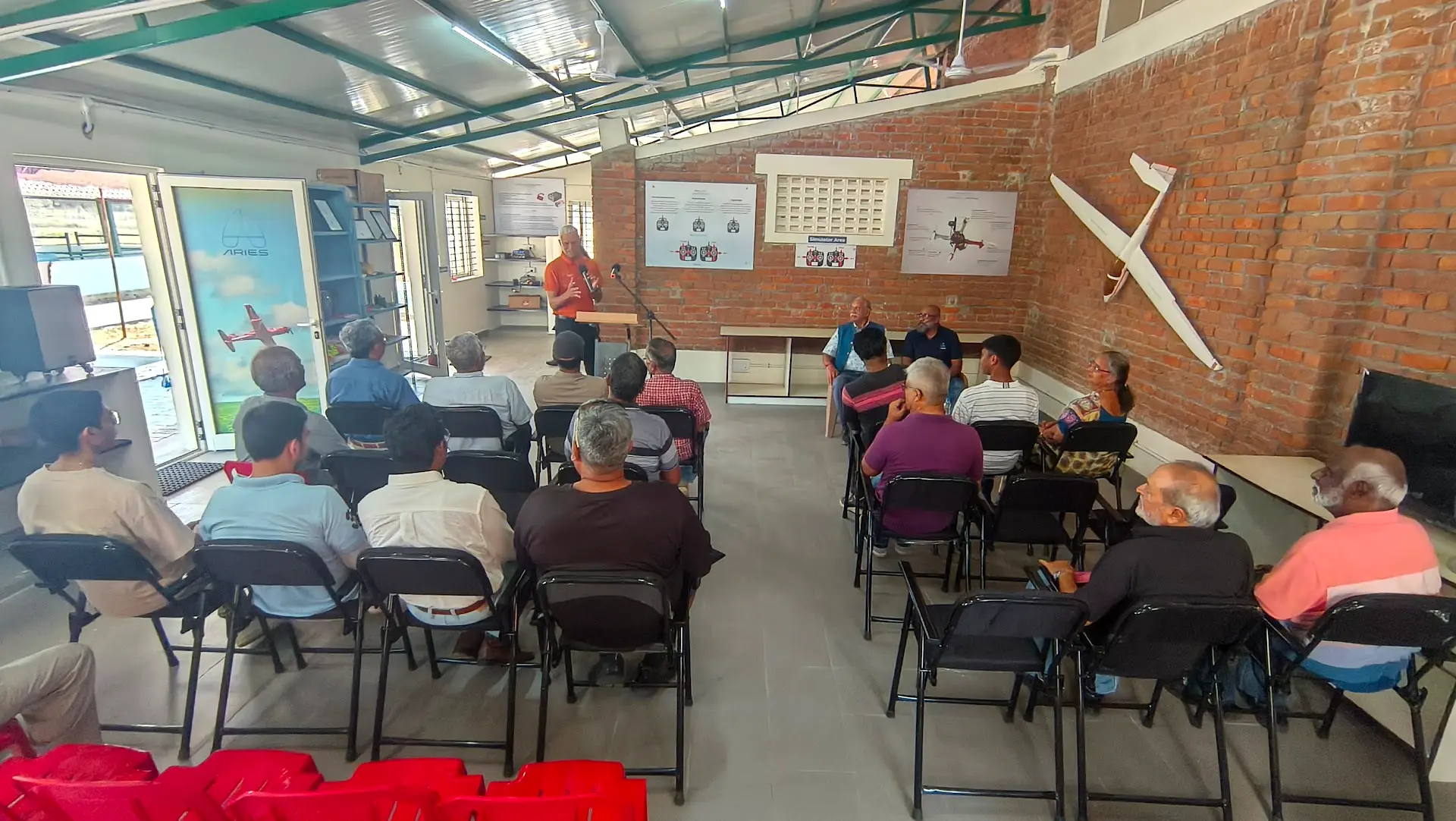
The Small Class course runs 5 days (about 25 to 30 hours). Days 1 to 3 are theory and demonstrations on drone rules, airspace, flight principles, ATC procedures, meteorology and emergency handling. Day 4 is simulator training and pre-flight checks. Day 5 is outdoor flight training and assessment. The published fee is ₹13,551 + GST (₹15,990 incl.).
On completion you receive the DGCA Remote Pilot Certificate for the class you trained in.
Step 5: Specialise after your certificate
The certificate is the licence to operate. Skills are what get you work. Common next steps are agriculture drone operations, survey and mapping, FPV flying and drone engineering. We cover these in our careers guides.
RelatedBrowse all courses →
Do you always need a certificate?
Not for every flight. Under the Drone Rules, nano drones (up to 250 g) and micro drones (up to 2 kg) flown for non-commercial purposes do not need a Remote Pilot Certificate. Anything heavier, or any commercial work, does. If your goal is a career or a business, plan on the certificate from day one.
Common mistakes beginners make
A little planning saves money and time.
- Buying a drone before checking its weight class and whether it can be registered.
- Treating the free theory class as a certificate. It is preparation only.
- Choosing Medium Class first when the work only needs drones up to 25 kg.
- Skipping simulator time, which is where good habits form before real flying.
Frequently asked questions
Can I become a drone pilot after 10th?
Yes. The Small and Medium Class RPC brochures specify 10th pass and age 18 or above.
How long does RPC training take?
The Small Class and Medium Class courses are each 5 days in a hybrid format.
Do I need to buy a drone before training?
No. Training uses academy drones and simulators, so you can decide on equipment after you qualify.
Is the free class enough to fly commercially?
No. It is theory preparation. Commercial flying needs the DGCA RPC from an approved RPTO.
Written by
Sakthivelan Ravindranath Tagore
Founder, Aerobot Labs
Aerobot Labs is a DGCA-approved RPTO in Chennai, training pilots, operators and drone engineers.