Key takeaways
- Small Class RPC covers drones up to 25 kg. Medium Class RPC covers 25 kg to 150 kg.
- Both are 5-day hybrid courses with theory, simulator and field flying.
- Pilots who already hold a Small Class RPC can add Medium through a 2-day upgrade.
- Pick by the drones you will actually fly, not by the larger number.
The clean distinction: weight
The Remote Pilot Certificate is issued by drone weight class. Small Class covers drones up to 25 kg. Medium Class covers drones from 25 kg to 150 kg. Under the Drone Rules, the weight that counts is the maximum all-up weight including payload.
- Small Class RPC: nano, micro and small drones up to 25 kg
- Medium Class RPC: drones above 25 kg and up to 150 kg
How the two courses differ
Both courses are 5 days in a hybrid format and share the same eligibility: 10th pass and age 18 or above. The difference is depth and the aircraft you practise on.
Small Class RPC
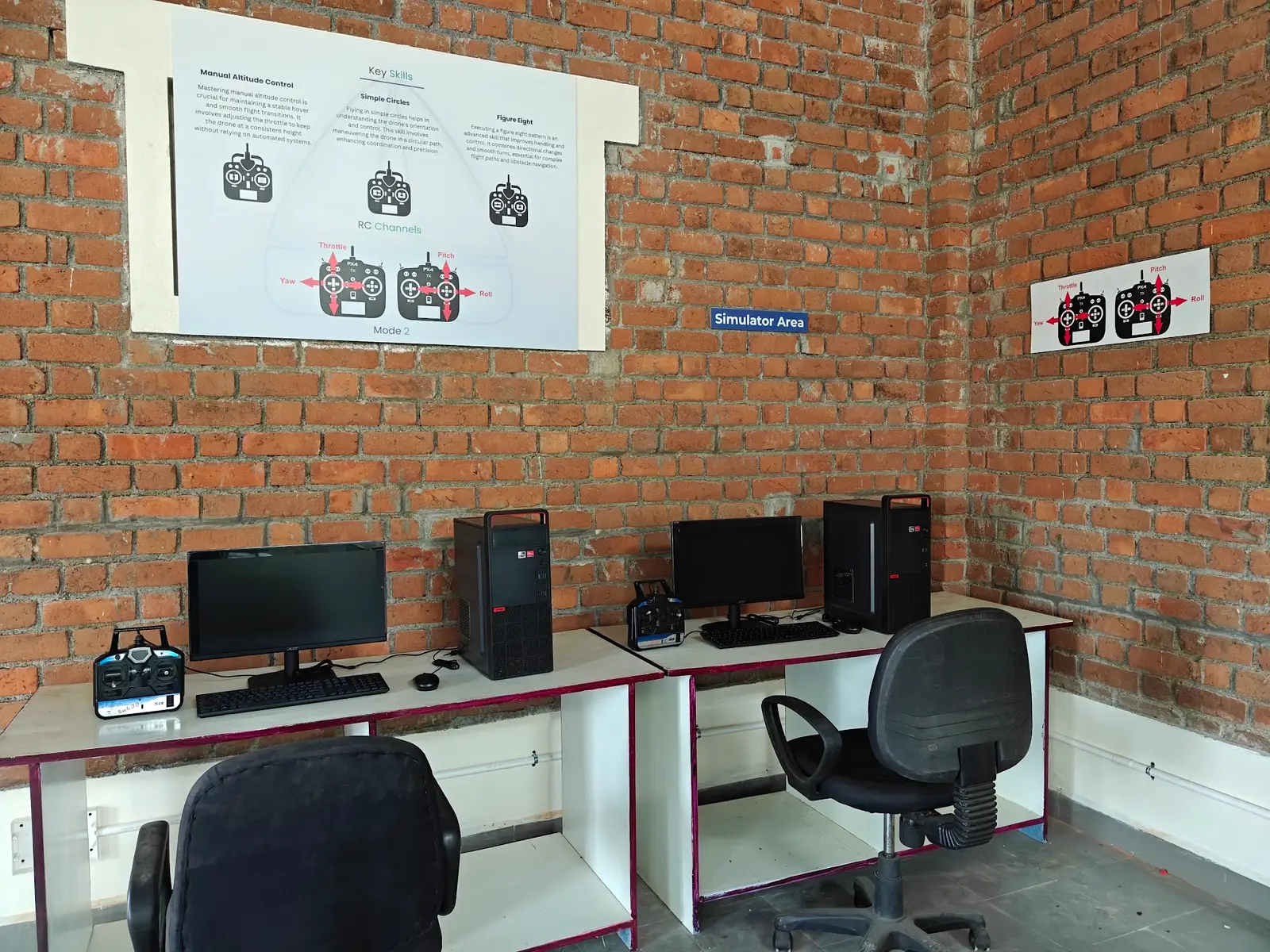
Days 1 to 3 cover drone rules and airspace, flight principles and ATC procedures, then meteorology, emergency handling and equipment. Day 4 is simulator training and pre-flight checks, and Day 5 is outdoor flight training and assessment.
Medium Class RPC
Medium Class goes deeper into regulations and advanced drone fundamentals, with payload installation and use, ATC procedures and radio telephony, and autonomous mission planning. Day 3 combines a theory test with simulator training, Day 4 is field drone training, and Day 5 is advanced flight and the final assessment.
Fees at a glance
Small Class is ₹13,551 + GST (₹15,990 incl.). Medium Class is ₹16,941 + GST (₹19,990 incl.). If you already hold a Small Class RPC, the 2-day Medium upgrade is ₹15,924 + GST (₹18,790 incl.), which is usually cheaper than taking the full Medium course.
RelatedFees explained →
Which one should you choose?
Choose Small Class if you are starting out, want to fly survey, photography, FPV or agricultural drones within 25 kg, or simply want the most common certificate first.
Choose Medium Class if your work already involves heavier platforms, such as large payload or agricultural aircraft above 25 kg. If your plans are uncertain, start with Small and use the upgrade route later.
RelatedSmall Class RPC training →Medium Class RPC training →Talk to a counsellor →
Upgrade routes and combos
You do not have to decide everything on day one. A Small Class certificate is a sound foundation, and the 2-day Medium upgrade (a short test, simulator work and Medium flying at our Vengal site) lets you step up when your work demands heavier aircraft.
If you already know you will fly agricultural drones above 25 kg, the Medium RPC plus Agriculture Operations combo bundles both courses in one enrolment.
RelatedAgriculture drone training →
A common weight-class trap
Weight is counted with the payload attached. A drone that weighs 22 kg empty can cross the 25 kg line once a full tank or a heavy sensor is fitted. Work out the loaded weight before you choose a class.
Frequently asked questions
Is Medium Class the same as Small Class?
No. They are different weight classes, with Medium covering heavier drones and a deeper syllabus.
Can I fly a medium drone with a Small Class RPC?
No. A Small Class certificate covers drones up to 25 kg. For 25 kg to 150 kg you need the Medium Class certificate.
How long is the Medium upgrade?
The upgrade for Small Class RPC holders is 2 days: a short test, simulator work and Medium flying.
Do both courses have the same eligibility?
Yes. Both specify 10th pass and age 18 or above.

Written by
Sakthivelan Ravindranath Tagore
Founder, Aerobot Labs
Aerobot Labs is a DGCA-approved RPTO in Chennai, training pilots, operators and drone engineers.