Key takeaways
- India regulates drones under the Drone Rules, 2021, as amended in 2022 and 2023. Treat any 'Drone Rules 2025' label with caution.
- Drones fall into five weight classes: nano, micro, small, medium and large. Your drone's weight decides which rules apply.
- Nano drones, and micro drones flown for non-commercial purposes, do not need a Remote Pilot Certificate (RPC). Heavier drones, or any commercial use, do.
- The Digital Sky airspace map sorts airspace into green, yellow and red zones. Check it for every new flying location.
- The RPC is issued by a DGCA-approved RPTO after training and a proficiency test, and stays valid for up to 10 years.
What the Drone Rules actually are
India's civil drone law is the Drone Rules, 2021, made under the Aircraft Act, 1934. They replaced a much heavier earlier framework with a lighter, largely online system run through the government's Digital Sky platform. Starting out is far easier than it used to be, but the rules still carry real obligations, and the Directorate General of Civil Aviation (DGCA) enforces them.
You will see articles online about 'Drone Rules 2025'. Do not rely on that label. The rulebook you work from is the Drone Rules, 2021 as amended, and whenever a detail matters, check the current text on Digital Sky rather than a blog post, including this one.
The 2022 amendment: a certificate, not a licence
The Drone (Amendment) Rules, 2022 removed the DGCA-issued remote pilot licence. In its place, an individual now earns a Remote Pilot Certificate (RPC) from a DGCA-authorised Remote Pilot Training Organisation (RPTO). Training and testing moved to the RPTO, which is why the choice of RPTO matters.
The 2023 amendment: no passport needed
The Drone (Amendment) Rules, 2023 changed the identity requirement on the RPC application. An Indian passport is no longer mandatory, and other government-issued identity and address proof can be used instead.
The five drone weight classes
Everything starts with weight. The class is set by the maximum all-up weight, which includes the payload. The Drone Rules define five classes:
- Nano: up to 250 g
- Micro: above 250 g and up to 2 kg
- Small: above 2 kg and up to 25 kg
- Medium: above 25 kg and up to 150 kg
- Large: above 150 kg
Why weight matters more than price
A pocket camera drone and a spray drone with a full tank sit in very different classes, with very different obligations. Before buying, check the all-up weight with battery and payload attached, not just the figure on the box.
Digital Sky, UIN and Type Certificate
Digital Sky is the government platform for drone registration, permissions and the airspace map. Three terms come up again and again.
- Digital Sky platform: where drones are registered, permissions are requested where required, and the airspace map can be viewed. The map is free to view.
- UIN (Unique Identification Number): the registration number a drone receives on Digital Sky. For the exact position on nano drones, check the current Drone Rules on Digital Sky.
- Type Certificate: a manufacturer obtains this for each drone model through Digital Sky. Nano drones and research models do not need one, and a model generally has to be type-certified before an individual drone of that model can be registered.
What this means if you are buying a drone
Buy a model that already has a Type Certificate and a clear Digital Sky registration route. A cheap imported drone with no certification can be impossible to register, which limits where and how you can legally fly it.
Green, yellow and red zones
Instead of asking permission for every flight, the Drone Rules divide airspace into three coloured zones on the Digital Sky airspace map. Always look at the live map for your exact location, because the map, not a blog post, is the authority.
Green zone
Green airspace is the easy one. In a green zone you do not need permission to fly, up to 400 feet above ground level (AGL). Most open land away from airports and sensitive sites falls here.
Yellow zone
Yellow zones need permission from the relevant air traffic control authority before you fly. Airspace above 400 feet is yellow, and so is airspace near airports. In the band roughly 8 to 12 km from an airport perimeter, flight above 200 feet needs ATC permission. Closer to the airport, the restrictions tighten further.
Red zone
Red zones are no-fly zones. Typical examples are sensitive government and defence installations and any area the map marks red. Flying there requires special permission from the central government, which a beginner should assume they will not get.
Who needs a Remote Pilot Certificate
This is the question most beginners get wrong, and it is simple once you separate weight from purpose.
- Nano drones: no RPC needed.
- Micro drones flown for non-commercial purposes: no RPC needed.
- Micro drones flown commercially: RPC needed.
- Small and medium drones: RPC needed.
Which RPC class do you need?
The certificate is issued by weight class. A Small Class RPC covers drones up to 25 kg, which includes almost every survey, photography and entry-level agricultural drone. A Medium Class RPC covers 25 kg to 150 kg and suits heavier payload and agri platforms.
RelatedSmall Class RPC training →Medium Class RPC training →
How to get your Remote Pilot Certificate
The route is now direct: train with an approved RPTO, pass its proficiency test, and the RPTO issues your certificate. There is no separate application to DGCA for a pilot licence any more.
- Age: 18 to 65 years.
- Education: 10th class pass from a recognised board.
- Training: complete the prescribed course at a DGCA-approved RPTO and pass the proficiency test.
- Identity: government-issued ID and address proof (a passport is no longer compulsory).
- Medical: ask your RPTO what medical documentation it needs, and check the current rules on Digital Sky.
- Validity: an RPC is valid for up to 10 years under the rules, with renewal as the rules provide.
What a good RPTO course looks like
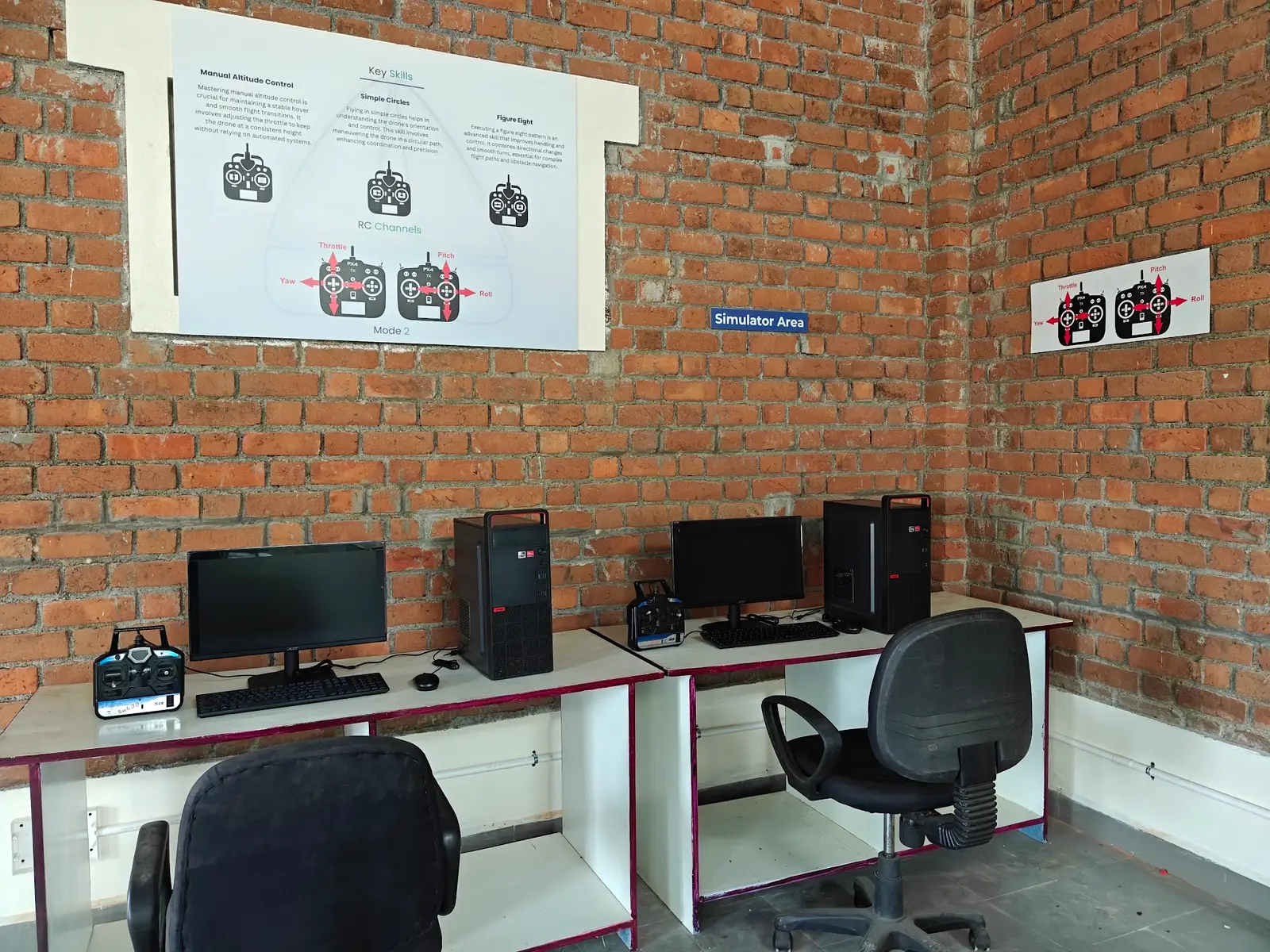
At Aerobot Labs the Small Class course is 5 days (about 25 to 30 hours): theory on rules, airspace and weather, then simulator work and outdoor flying with an assessment. Fees are published openly (₹13,551 + GST (₹15,990 incl.)). If you want a no-risk first step, the free 2-day theory class covers the basics before you pay for anything. See our guide to DGCA drone pilot training in Chennai or how to choose an RPTO in Tamil Nadu.
RelatedFree drone pilot theory class →DGCA drone pilot training in Chennai →Best RPTO in Tamil Nadu →
Insurance, penalties and common mistakes
Two obligations catch new operators out. The first is insurance: the Drone Rules require third-party insurance for drones, with nano drones exempt. If you operate commercially, treat insurance as a basic cost of doing business, and ask your insurer how it covers your specific drone.
The second is penalties. Contravening the Drone Rules can attract a penalty of up to Rs 1 lakh, imposed after the person is given an opportunity to be heard. Other applicable laws can come into play as well, especially around sensitive locations.
Mistakes we see most often
- Assuming a small drone is exempt because it feels like a toy. Weight and purpose decide, not size.
- Flying in a yellow zone without ATC permission because the spot 'looks open'.
- Forgetting that payload counts toward the weight class.
- Skipping the Digital Sky map because the location worked last time. Zones can be updated.
- Believing a certificate from any course is a DGCA certificate. Only an approved RPTO can issue the RPC.
Your first-flight checklist
Before you fly for the first time, work through this list. It takes ten minutes and prevents most legal trouble.
- Confirm your drone's weight class, including payload.
- Check whether your use (personal or commercial) requires an RPC.
- Check the Digital Sky airspace map for the exact flying location.
- Keep to 400 feet AGL in a green zone, and below 200 feet in the 8 to 12 km band near an airport unless you have permission.
- Confirm registration, UIN and insurance where they apply.
- Check weather, battery health and your return-to-home settings.
- Keep the drone in visual line of sight and avoid people, roads and crowds.
Frequently asked questions
Do I need a licence to fly a drone in India?
Since the 2022 amendment there is no DGCA pilot licence. You need a Remote Pilot Certificate from a DGCA-approved RPTO if you fly a drone above the nano class, or a micro drone commercially. Nano drones, and micro drones for non-commercial use, do not need one.
What are the drone weight categories in India?
Nano is up to 250 g, micro is above 250 g and up to 2 kg, small is above 2 kg and up to 25 kg, medium is above 25 kg and up to 150 kg, and large is above 150 kg.
What is the difference between green, yellow and red zones?
Green zones allow flight up to 400 feet AGL without permission. Yellow zones need air traffic control permission, including above 200 feet in the band about 8 to 12 km from an airport perimeter. Red zones are no-fly zones that need central government permission.
Who can get a Remote Pilot Certificate?
You must be between 18 and 65 years old, have passed 10th class, complete training at a DGCA-approved RPTO and pass its proficiency test. Check the current Drone Rules on Digital Sky for any medical requirement.
How long is the Remote Pilot Certificate valid?
Under the Drone Rules it is valid for up to 10 years, with renewal as the rules provide.
Is a passport required to apply for the RPC?
No. The 2023 amendment removed the passport requirement; other government-issued identity and address proof can be used.
Is drone insurance compulsory in India?
The Drone Rules require third-party insurance for drones, with nano drones exempt. Check the current Drone Rules on Digital Sky and speak to your insurer about your specific drone.
What is the penalty for breaking the Drone Rules?
A penalty of up to Rs 1 lakh can be imposed for contravening the Drone Rules, after the person has had an opportunity to be heard. Other laws may also apply.

Written by
Sakthivelan Ravindranath Tagore
Founder, Aerobot Labs
Aerobot Labs is a DGCA-approved RPTO in Chennai, training pilots, operators and drone engineers.